


Pickup Throwdown: 2025 Chevy Colorado vs 2025 Ford Ranger
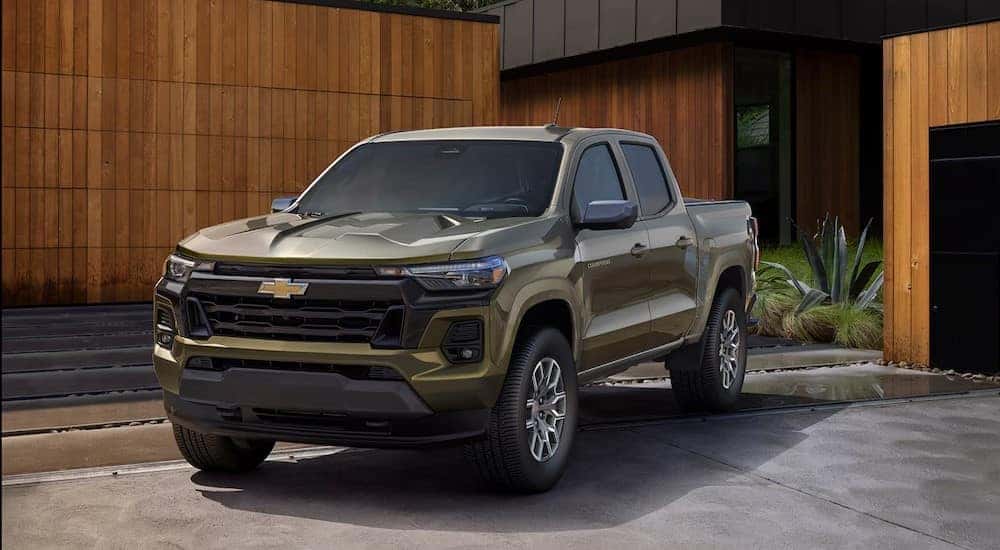
Some say that specialization is key if you want to set yourself apart in a crowded market, but those people have never met the Chevy Colorado. While many of today’s pickups tend to excel in a particular niche, the Colorado is about as versatile as they come, seamlessly morphing between fleet vehicle, daily driver, performance beast, and off-road legend depending on what trim, options, and packages you decide on. This well-rounded approach has seen it earn plenty of praise from drivers and critics alike, and the 2025 Chevy Colorado for sale is no exception.
This Colorado gains some intriguing new options and standard features, including a new-and-improved engine, but how does it compare to some of its closest competitors? The Ford Ranger is another popular choice in today’s midsize segment and serves as an interesting benchmark that we can use to gauge the Colorado’s performance, efficiency, off-road ability, and towing and payload capacities. Let’s examine some of the parallels between these two pickups, learn how they differ, and see which truck is worth your hard-earned money.
Performance
Chevy made some major changes to the Colorado as it unveiled the 2025 iteration, packing the pickup with fresh paint options, a moody Midnight Edition Package, and a host of new standard features like a rear defroster, sliding rear window, and cruise control. These upgrades aside, it’s the truck’s revised engine lineup that really marks the most significant improvement. The Colorado still packs the same turbocharged 2.7-liter inline-four engine that’s long made it such an enticing option for those who prioritize both performance and efficiency, but Chevy upped the horsepower to ensure that all drivers can handle the toughest towing and hauling tasks without having to invest in a higher trim.
While the previous turbo-four was limited to 237 hp for the WT and LT trims, all 2025 Colorado trims are now treated to the 310-hp version. Drivers are sure to notice that 30% increase as soon as they step on the gas, with the Colorado providing a peppy, responsive ride that goes a long way toward elevating the everyday driving experience. Boasting 430 lb-ft of torque, the Colorado’s 2.7-liter engine is the same that you’ll find under the hood of the full-size Chevy Silverado 1500. The potent powertrain delivers full-size power in a midsize package and makes the Colorado pretty tough to beat from a pure performance perspective. So, how does the Ranger hold up?
The Ford’s turbocharged 2.7-liter V6 narrowly outpaces the Colorado’s engine at 315 hp, though it does lag in the torque department with a maximum output of 400 lb-ft. There’s also another problem: Unless you invest in one of the Ranger’s top trims, you’ll find yourself limited to a 2.3-liter four-cylinder design that maxes out at 270 hp. That might have once been serviceable in this segment, but with competitors like the Colorado becoming more powerful every year, logging less than 300 hp makes the Ranger a tough sell. The lineup-topping Raptor variant has a larger 3.0-liter V6 that offers more than 400 hp, but drivers will pay a hefty price for that sort of performance, with the model starting well over $55k.
Efficiency
The Colorado’s turbocharged engine brings some obvious benefits in terms of performance, allowing the truck to produce more power with a smaller displacement thanks to a little forced induction, but it also makes Chevy’s midsize model a standout in terms of efficiency.
The Colorado can achieve up to 19 MPG in the city and 23 MPG on the highway when equipped with rear-wheel drive, which is a solid number for the midsize segment. Better yet, calling every wheel into action won’t really cost you at the pump, with the 4WD model delivering an impressive 17 MPG in the city and 21 MPG on the highway. Opting for the off-road beast that is the Colorado ZR2 Bison will see that number drop ever so slightly, but it’s a small price to pay for the sort of go-anywhere performance the top trim can offer.
Despite its larger engine, the Ranger also provides some decent fuel economy. Ford’s midsize pickup offers an EPA-estimated 21 MPG in the city and 26 MPG on the highway for the RWD version, but choosing the 4WD model does see the Ranger return just 19 MPG in the city. While the Ranger’s off-road Raptor variant might be the apex predator of the lineup, its fuel efficiency is also a bit prehistoric, with the model providing drivers just 16 MPG in the city and 18 MPG on the highway.
Those numbers are even a bit misleading as the rigors of off-road driving will likely see those stats reduced even further in real-world applications. The Raptor’s relatively thirsty engine also presents a problem in terms of range. The inline-four engine allows drivers to travel up to 430 miles on a single tank of gas, but the Raptor’s maximum range of 340 miles could be a bit limiting for those attempting an off-the-grid overlanding adventure.
Capabilities
Performance and efficiency are two compelling reasons to choose the Colorado when you’re in the market for your next midsize pickup, but it’s the truck’s remarkable towing capacity that really sets it apart. With 7,700 lbs of maximum towing capacity, the Colorado ties with its cousin, the GMC Canyon, to top the rest of the midsize segment. The 2025 Colorado also aces the payload test at 1,684 lbs, and while the Ranger does squeak out a minor victory at 1,788 lbs, the Raptor variant weighs in at just 1,411 lbs for a below-average showing.
Those 273 lbs could make a big difference when trying to haul all the gear, supplies, and camping equipment you’ll need for your next off-road excursion, which is something drivers should probably consider before settling on either model. If you’re looking for a new truck that can cart boats, ATVs, campers, or a trailer full of construction equipment and supplies, the Colorado is the clear choice.
The Ranger comes in a close second with a max towing capacity of 7,500 lbs, though once again, the Raptor variant’s slate of off-road equipment has a predictable effect on the total, with just 5,510 lbs to its name. Both trucks still fare a lot better than the competition. The Jeep Gladiator rivals the Colorado at 7,700 lbs, and the Nissan Frontier serves up a respectable 7,150 lbs, but the same can’t be said for the Toyota Tacoma (6,500 lbs), Hyundai Santa Cruz (5,000 lbs), and Honda Ridgeline (5,000 lbs). These last two models suffer from their crossover-based approach, which can simply not compete with traditional body-on-frame vehicles like the Chevy Colorado when it comes time to put in some real work.
Off-Roading
Most midsize trucks make do with a single off-road trim, but the Colorado bucks the trend to give drivers four persuasive pickups to choose from. The Trail Boss represents the base off-road option, though there’s nothing basic about the truck’s off-road credentials. Chevy has designed the Trail Boss with a two-inch suspension lift that’ll come in handy when trying to avoid off-road obstacles, plus an automatic locking rear differential and a two-speed transfer case that provide ample traction.
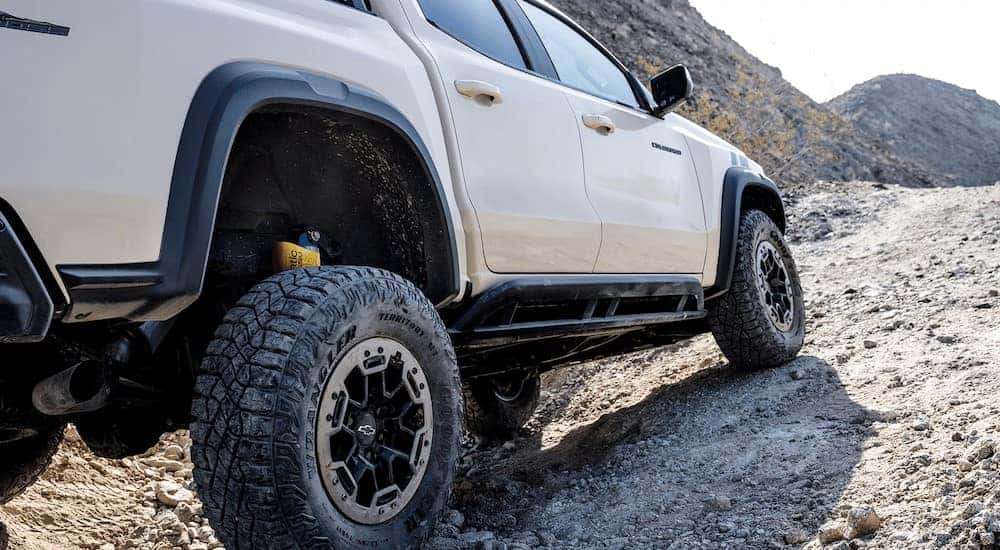
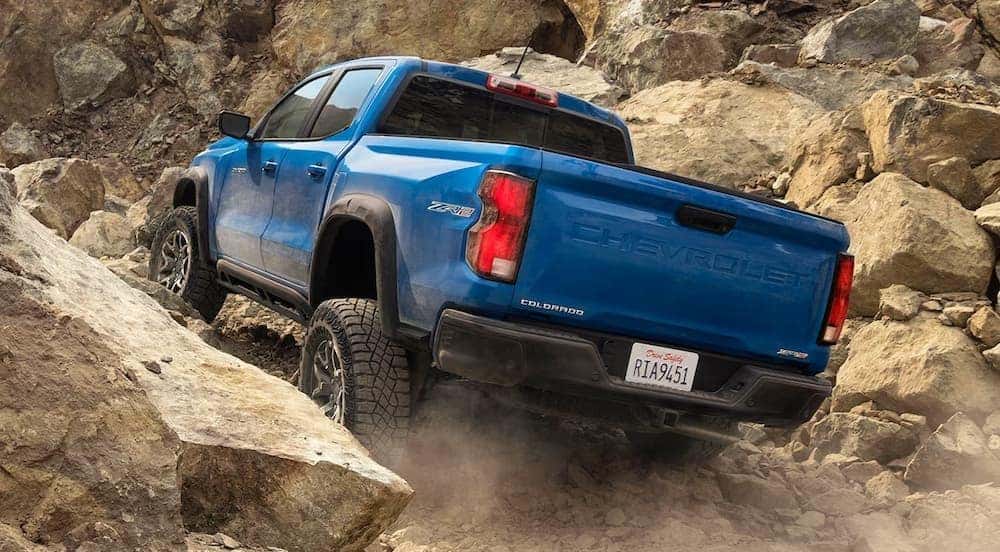
The Z71 represents a more luxurious take on the standard off-road rig, with the bowtie brand adding a heated steering wheel, leather upholstery, and ventilated front seats that’ll make those long summer days on the trail just a little more comfortable. The ZR2 is where the Colorado really gets the chance to display its off-road chops. Equipped with mud-terrain tires, driver-selectable front and rear locking differentials, and a three-inch suspension lift that gives the truck 10.7 inches of ground clearance, the ZR2 is worth every penny if you’re the type of driver that yearns for deep, muddy ruts and sheer rock faces. The ZR2 also gains plenty of protective features like rocker-panel rails, fender flares, and a new set of bumpers that improve the pickup’s approach and departure angles.
Of course, if you want even more, there’s the ZR2 Bison edition, which sees Chevy team up with the off-road experts at American Expedition Vehicles (AEV) to outfit the regular ZR2 with all the heavy-duty off-road gear you can imagine. A set of 35-inch tires up ground clearance to 12.2 inches while AEV skid plates, fender flares, and stamped steel front and rear bumpers provide vital protection from the bumps and bruises that come with exploring. The ZR2 Bison also has a full-size spare tire mounted in the bed, but the real highlight would have to be the Multimatic DSSV dampers with jounce control. Designed to protect the underbody from incurring any damage when you fly off a jump, these dampers up the confidence factor by preventing the pickup from bottoming out
The Ranger’s lack of trim options really comes back to bite it if you’re the kind of driver that values off-road performance. The Colorado offers six distinct versions, but with a stubby lineup that’s limited to just three trims and the Raptor variant, the Ranger just can’t hope to compete with Chevy’s champion. Don’t get us wrong: the Raptor lives up to the high bar set by the original F-150 Raptor and provides a full arsenal of off-road equipment, including 33-inch all-terrain tires, locking front and rear differentials, a custom suspension with wider front and rear tracks, and sophisticated FOX suspension dampers.
However, even those features don’t make up for the lack of off-road alternatives and the fact that the Raptor rings in at a good $6k more than the ZR2 Bison. While low-speed cruise control, dedicated off-road drive modes, and a set of preinstalled upfitter switches used to control optional aftermarket accessories sweeten the deal, the Raptor could well face extinction a lot sooner than the Colorado.
The Colorado Bests the Ranger
Chevy’s commitment to continual improvement means that the 2025 Colorado might just be the best offering in the model’s long history. A new base engine effortlessly combines power and efficiency in a way that few models can match, and the truck’s best-in-class towing capacity speaks for itself. The Colorado’s expansive trim ladder offers something for everyone, whether you’re on the hunt for an efficient fleet vehicle, a dependable ride for your commute, or a trail-ready truck that can take whatever Mother Nature can throw at it.
The Ranger does its best to keep pace, but Ford’s midsize pickup lags in a few important areas while somehow carrying a higher price tag. Ford loyalists might be won over by the Ranger’s efficiency and the performance-minded Raptor trim, but objective drivers can easily see that the Colorado sits alone atop the midsize segment. If you want to see what all the buzz is about and get behind the wheel of your own 2025 Chevy Colorado, make Jim Ellis Chevrolet your first and last stop.