


What Are the Fluids in Your Vehicle and What Do They Do?
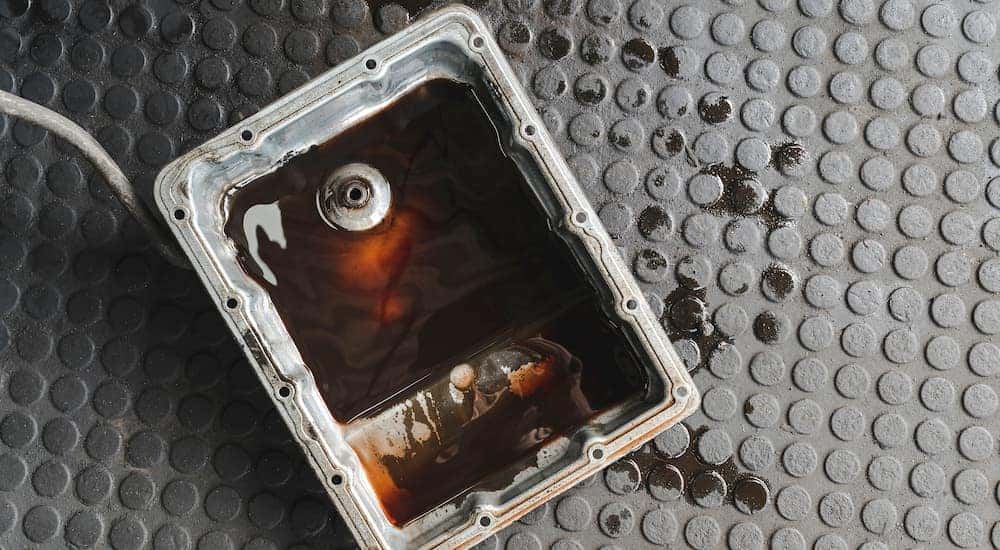
Your vehicle is a complex series of components and mechanisms. Internal combustion vehicles have a lot of different systems and fluids required for a variety of purposes. This is because cars, trucks, and SUVs need these systems not only for basic travel but also for safety and convenience. Nearly every major component on a vehicle actually requires some kind of fluid system. This includes the engine, transmission, differentials, brakes, and even the steering. Below is a more detailed explanation of your vehicle’s array of fluids and what they’re used for. If you’re looking for auto service near Johns Creek, look no further than Jim Ellis Chevrolet for all your service needs, including topping off and replacing your vehicle’s vital fluids.
Regular and Diesel Fuel
The most prominent and renowned fluid for any internal combustion engine vehicle is gasoline or diesel, depending on the vehicle’s configuration and whether it is a standard or diesel powertrain. Regardless of whether you have a diesel or gasoline vehicle, their core function happens to be the same in the sense that it’s the fuel that works as your vehicle’s core propulsion.
Gasoline or diesel fuel is moved through the fuel line into the engine and used as a combustible source within the engine bay to cycle the pistons up and down in the engine block. The piston movement then causes the rotary motion of the crankshaft, whose torque is transferred to the driveshaft from the transmission. This spins the differential and rotates the wheels, causing the vehicle to move.
Engine Oil
While fuel propels the vehicle, oil keeps the engine running smoothly and the parts inside the engine block lubricated. Engine oil is extremely important for maintaining the health of your vehicle, especially a vehicle that experiences a lot of wear and tear on the road. The more work an engine has to do, the more the parts will be strained, and higher-quality engine oil is required.
Engine oil is one of the fluids in a vehicle that has to be changed often due to the work that an engine does. As the oil moves through the engine bay to lubricate the parts, it also picks up debris from the combustion process as well as just general vehicular use. Over time the engine oil becomes dirty and the engine oil filter will need to be replaced along with the engine oil itself.
Engine Coolant/Radiator Fluid
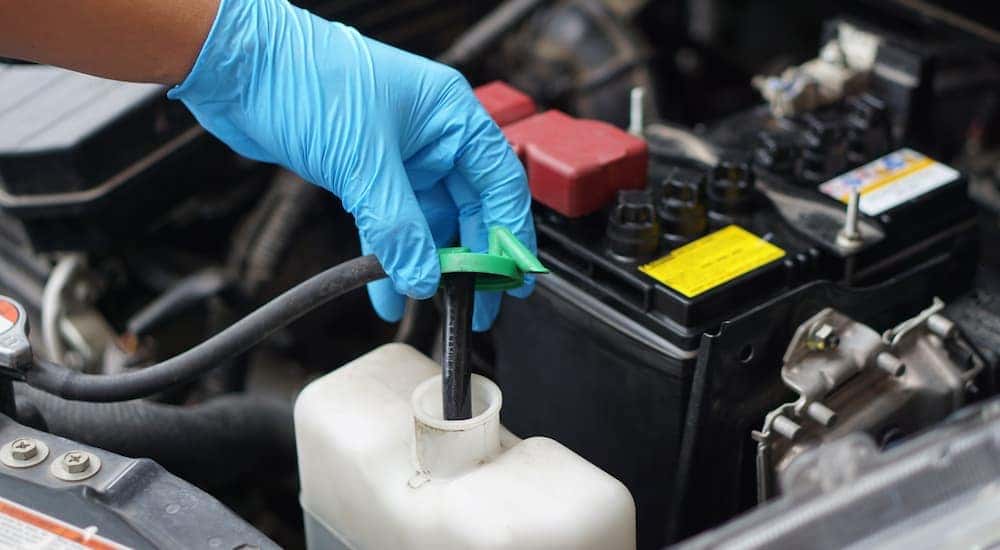
Engine coolant, or radiator fluid, helps keep the engine cool by transferring the heat generated from the engine out of the bay. So, the engine oil and coolant work as a tag team to reduce the heat and keep the engine from overheating. This is accomplished by the water pump, which pumps the coolant through the engine bay while the radiator manages to move the heat out of the coolant as it passes through the radiator.
So there is the cycle of the engine getting hot, the coolant carrying the heat out of the engine, and the radiator carrying the heat away from the coolant. Engine coolant is also sometimes used with antifreeze to prevent it from freezing during cold weather so that the coolant stays as a liquid form and can keep the engine cool during operation.
Transmission Fluid
Much like engine oil, transmission fluid works to keep the transmission functioning efficiently. Its primary goal is to help keep the parts within the transmission well lubricated to avoid them breaking down or grinding out. Given all the complex gears inside of a transmission, they need to be kept lubricated at all times to function efficiently. However, transmission fluid is often pulling double duty both as a means of lubricating the parts and as a means of hydraulic fluid to help with the transmission’s job in converting the engine’s torque into propulsion. So this raises the importance of the transmission fluid and ensuring the right type is used for maximum longevity and operation, especially for heavy-duty vehicles.
Brake Fluid/Clutch Fluid
There is fluid for the braking system and the clutch for manual transmissions. Clutch fluid usually shares with the brake fluid, and it’s necessary for when you depress the clutch pedal before shifting gears so that the clutch is engaged and the gears can shift. The same applies to the brake, where the brake fluid is used to stop the car by depressing the brake pedal and sending the fluid to the calipers located on the rotors of each of the four wheels. When the brake pedal is pressed, it causes the calipers to clamp the brake pads onto the rotors. This causes the vehicle to come to a halt or to prevent the vehicle from moving while the vehicle is in gear.
Differential Fluid
One of the more important fluids that often isn’t talked about as much as some of the other fluids is the differential fluid. For four-wheel drive vehicles, this includes front differentials and rear differentials, which have differential fluid. This fluid is used to lubricate the bearings and gears inside of the differentials. This is essential for keeping the axles moving smoothly on the road and spinning without locking up. After so many miles, the fluid needs to be changed to prevent the gears inside the differentials from locking up or causing problems that will prevent the vehicle from operating as it should.
Wiper Fluid
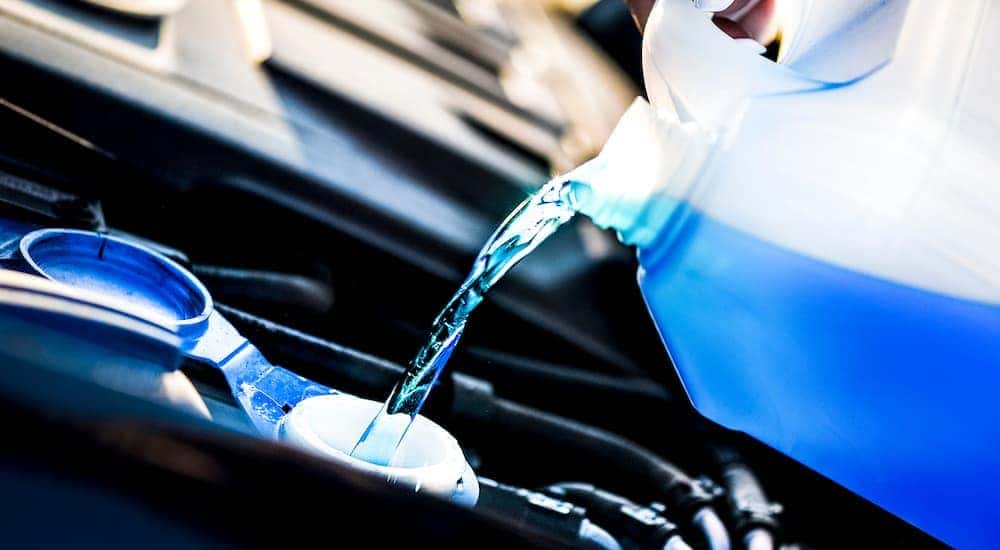
Wiper fluid has to be viscous enough not to evaporate during extremely hot weather yet thin enough not to smear or cake up on the glass. Thanks to its composition, certain kinds of wiper fluid are capable of cleaning dirt off of the windshield, while also avoiding freezing during the cold seasons. That’s why this fluid is made up of various liquid components rather than simply being water, as you need it for multiple occasions and seasons and to be able to withstand different kinds of temperature conditions. However, it is important to check the fluid type to ensure it can withstand freezing temperatures.
Power Steering Fluid
Power steering has its own fluid to ensure the vehicle is responsive on the road. If a vehicle feels tight and precise while traveling on the road, it’s because of power steering. The fluid is not as proprietary as some of the other fluids, so some vehicles can interchange the fluid so long as it’s compatible. Leaks or constant wear can compromise the power steering, which must be checked during most regularly scheduled checkups. Unlike a lot of other fluids, you don’t need to flush or change the power steering fluid regularly unless you drive your vehicle very hard and utilize a lot of aggressive maneuvering.
Air Conditioning Refrigerant
This fluid is necessary for use with the air conditioning system to keep the vehicle cool inside the cabin. The air conditioning coolant is inserted into a tank, and the hoses transfer the refrigerant from the tank to the compressor, where the refrigerant is liquified for the condenser. The condenser then works to evaporate the liquid and turn it into cool air inside the cabin of the vehicle. You will need to refill the refrigerant every so often, to keep the air conditioning working as intended.
Keeping Your Vehicle Fluids Fresh
It’s important to keep your vehicle fluids fresh as part of the regularly scheduled maintenance. If you need auto service near Johns Creek, and need your oil changed, your transmission fluid changed, your refrigerant replaced, or your brake or steering fluid flushed, you can visit us to learn more about the fluids you need changed in your vehicle. We can help you with getting top-offs, flushes, or changes as needed, or you can talk to our technicians about when you should be getting the fluid changed for your vehicle as needed.